
Camping utensils help people prepare, eat, and clean up meals outdoors without relying on bulky kitchen tools. The category includes compact forks, spoons, knives, sporks, chopsticks, and multi-piece sets designed for camping, hiking, and backpacking.
The best camping utensils balance useful function, low weight, durable materials, and easy cleaning. Stainless steel offers strength and longevity, while titanium reduces weight for backpacking; plastic and silicone can cost less but may stain, retain odors, or wear sooner. Buyers should also check packed size, utensil length, dishwasher compatibility, and whether the set includes a case or attachment.
We evaluated camping utensils for everyday usability, portability, durability, and cleanup to identify the options that make outdoor meals simpler.
Best Camping Utensils
The following list features the best camping utensils for preparing, serving, and eating meals outdoors. Each option combines practical design, portability, and durable materials for reliable use at the campsite.
Quatish Travel Utensils Set

Travel Utensils with Case, Quatish Portable Silverware Set for Work, Stainless Steel Reusable Travel Cutlery Set for Camping
Stainless Steel: Lightweight, sharp, and easy to clean. Made from food-grade, 18/8 stainless steel material, offer excellent resistance against rust and corrosion.
This set suits campers who want a compact, reusable place setting that stays organized inside a backpack or lunch bag.
Pros
- Includes a fork, spoon, knife, chopsticks, and storage case
- Stainless steel construction cleans easily and resists rust
- Case helps contain moisture and food residue after meals
Cons
- The knife may feel less capable for tougher foods
- Chopsticks require more practice for users who are unfamiliar with them
- The compact case leaves little room for extra utensils
The adult-sized fork and spoon handled typical camp meals comfortably, while the polished stainless steel wiped clean without much effort. The knife worked well for sandwiches, fruit, and other soft foods but was not a substitute for a dedicated camp knife.
The chopsticks add useful versatility for noodles, rice, and small food pieces. Their textured finish improved grip, although users who rarely use chopsticks may prefer the fork for convenience.
The slim case fit easily into a daypack and kept the utensils together during transport. Its elastic band reduced rattling, and the wipe-clean lining made it easier to store the set after a quick campsite cleanup.
Jetboil TrailWare Utensil Set
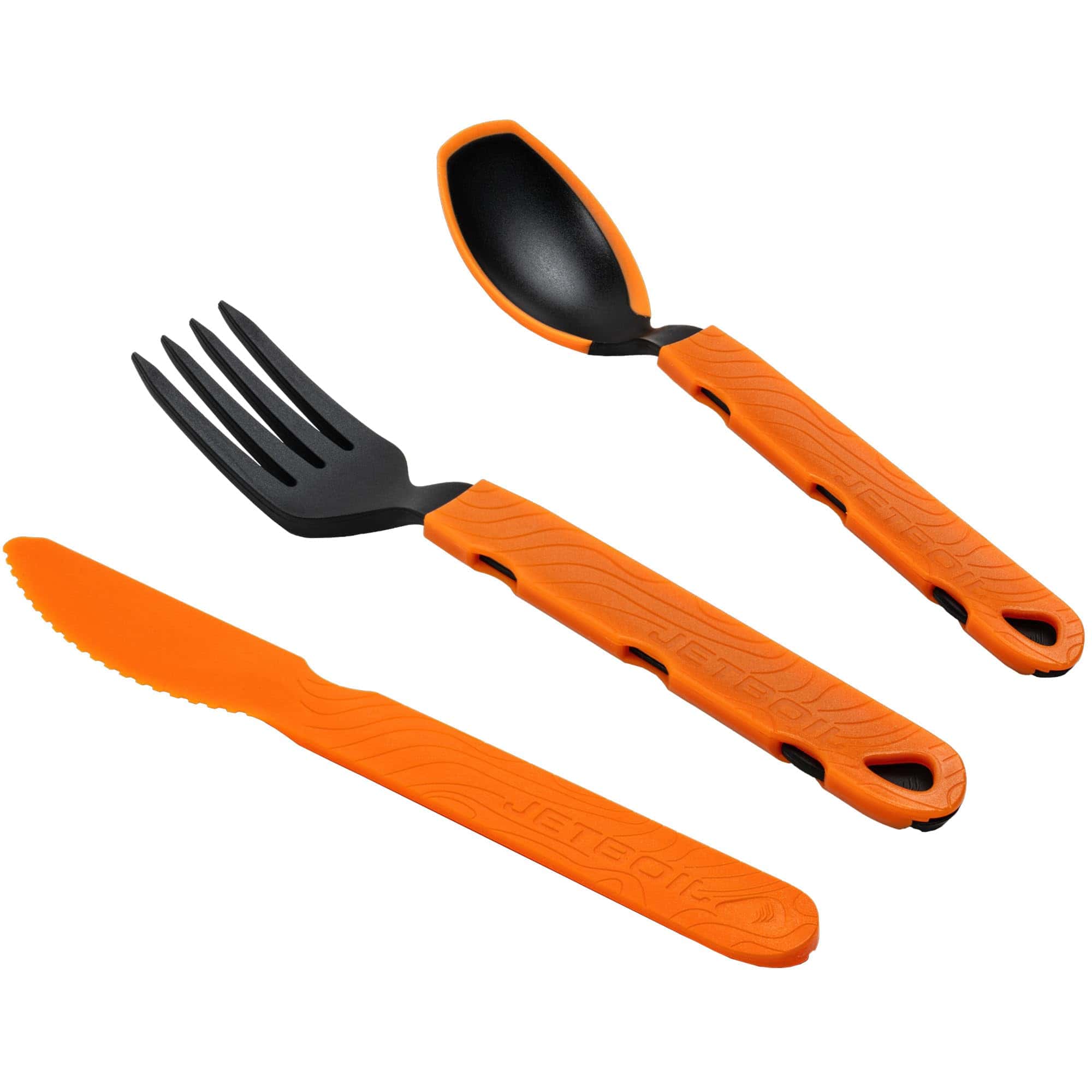
Campers should consider the Jetboil TrailWare for its compact design, adjustable handles, and pot-friendly spoon edge.
Pros
- Fork and spoon extend for easier use with deep pots and meal pouches
- Utensils snap together neatly for packing
- Silicone-edged spoon helps protect cookware while scraping
Cons
- Hand washing adds cleanup time at camp
- Plastic construction may feel less durable than metal flatware
- The knife suits basic spreading and cutting rather than tougher food
During testing, the extendable fork and spoon made a noticeable difference in tall cookpots and dehydrated meal bags. The three-position handles also let campers shorten the utensils before stowing them.
The spoon’s flexible edge collected food from the sides and bottom of a pot without making the scraping noise associated with metal utensils. Its 1.6-ounce weight kept the set easy to add to a backpack, while the connected design prevented the pieces from scattering.
The knife handled simple camp tasks, but it did not replace a sturdy kitchen knife. The plastic build also requires hand washing, so the set works best for campers who value low weight and compact storage over maximum durability.
Alijonalo 5-in-1 Camping Utensils Set
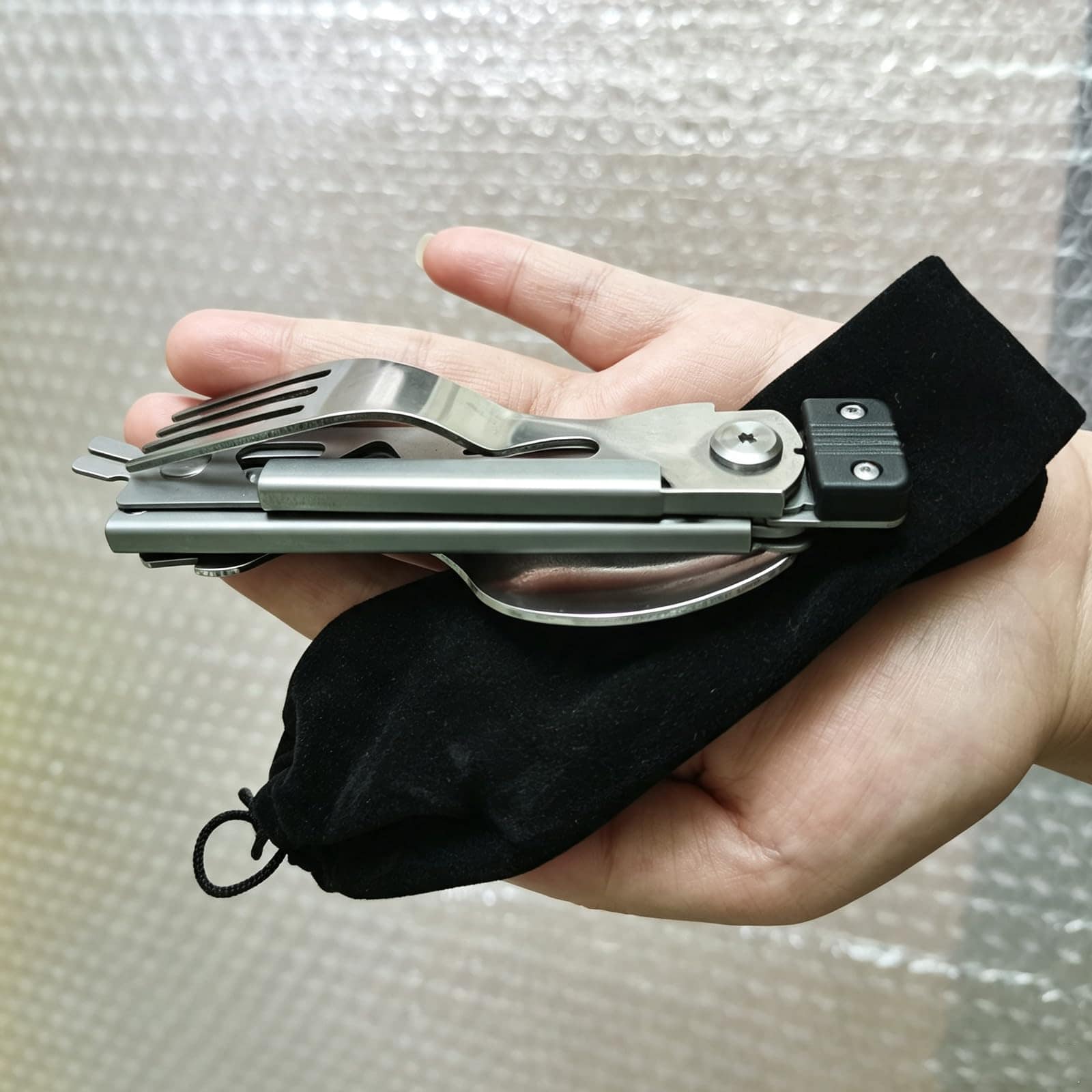
This compact set suits campers and hikers who want basic eating and cooking tools in one pocket-sized package.
Pros
- Combines a knife, fork, spoon, bottle opener, and barbecue tongs
- Folds into a small pouch for easy packing
- Detachable fork and locking knife improve handling
Cons
- Small tongs may feel limited for larger foods
- The connected design takes practice to reassemble
- Stainless steel should be cleaned promptly after use
The folded utensil fit neatly into a backpack pocket, and the included pouch kept the pieces together between meals. Its low weight made it practical for short hikes, picnics, and minimalist camp kitchens.
The fork detached from the knife and spoon, which made eating more comfortable than using the pieces as one unit. The knife’s lever lock also helped keep it open during cutting, although users should still handle the edge carefully.
The tongs worked best for turning small items over a camp stove or grill rather than handling heavy food. The polished stainless steel cleaned up easily after use, but dried-on food required more attention.
Orblue 4-in-1 Camping Utensils
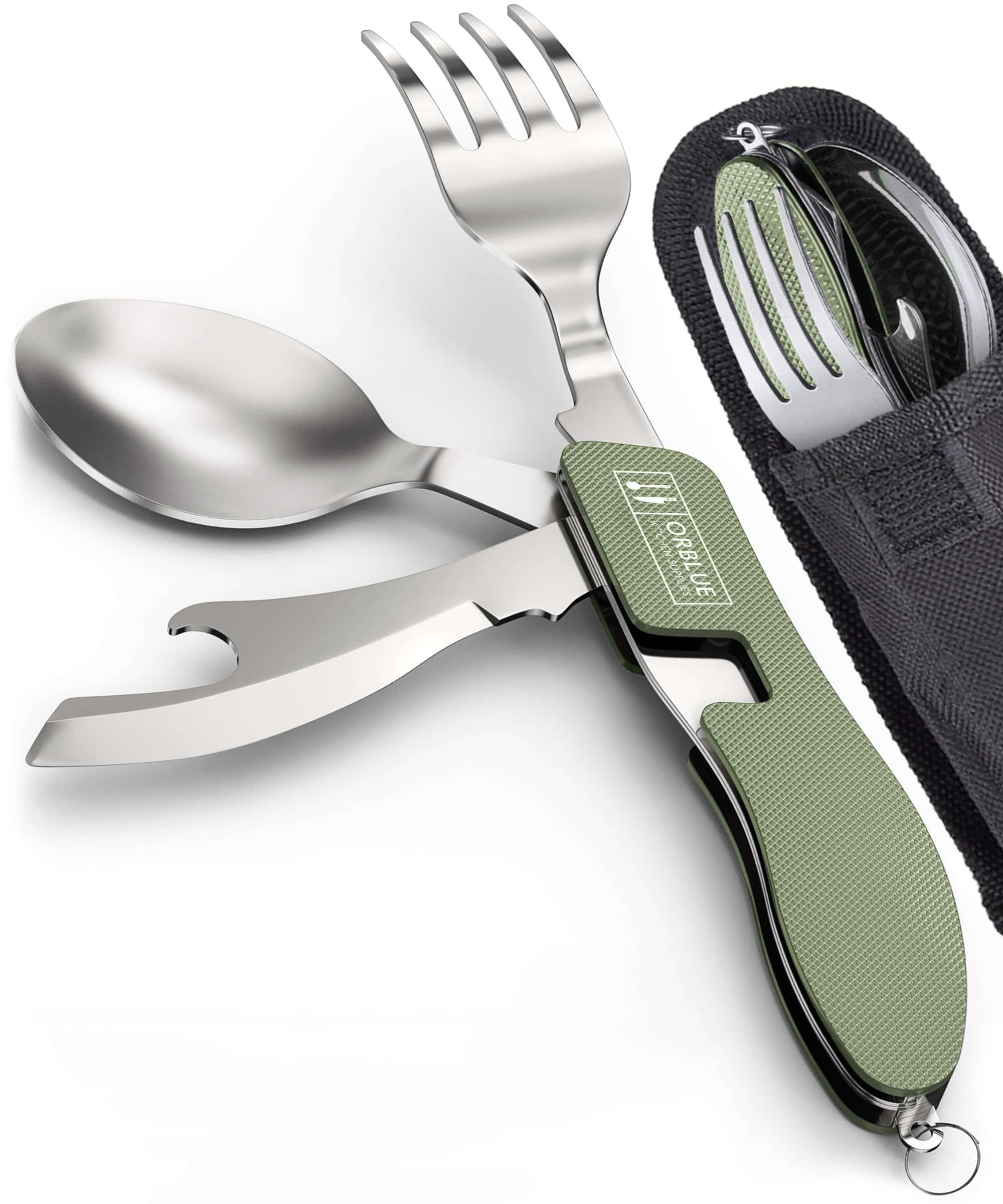
The Orblue set suits campers who want compact stainless-steel utensils that handle basic meals without adding much bulk.
Pros
- Combines a spoon, fork, knife, and bottle opener
- Folds or separates for easier packing and cleaning
- Solid stainless-steel construction feels more durable than disposable cutlery
Cons
- The compact design provides less grip than full-size utensils
- Hand washing may be less convenient at busy campsites
- The knife works best for simple foods rather than tough cuts
The Orblue utensils fit neatly into a small pack pocket, making them convenient for day hikes, backpacking trips, and emergency camp kits. The included case also keeps the set together instead of letting individual pieces scatter through a bag.
During use, the spoon and fork handle typical camp meals well, while the knife manages softer foods and basic slicing. Its compact form saves space, but users with larger hands may find the grip less comfortable during longer meals.
The polished stainless steel cleans up easily with soap and water and resists the staining that can affect cheaper cutlery. Because the set requires hand washing, campers should pack a small cleaning cloth or rinse it soon after eating.
UCO 3-in-1 Utility Spork 2-Pack
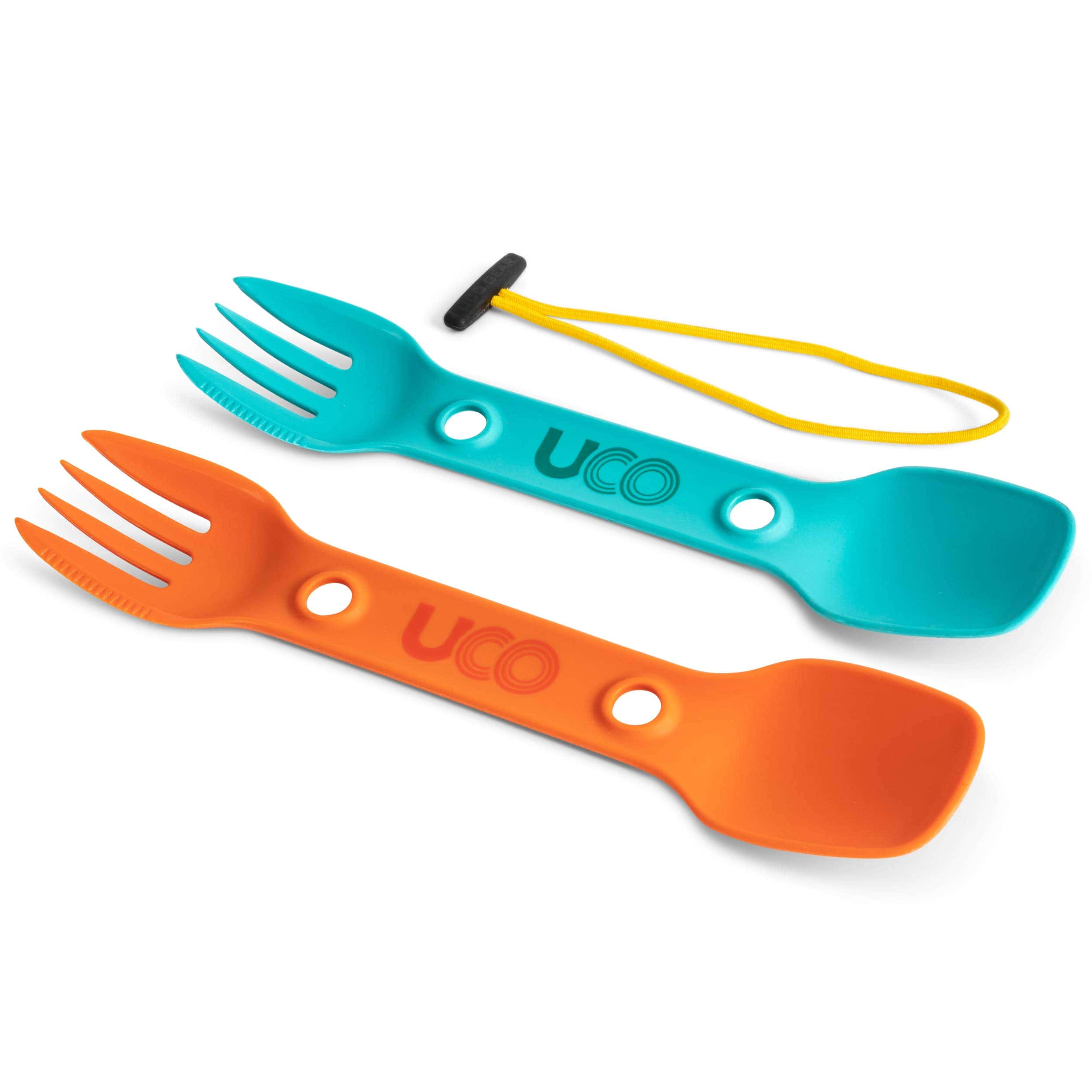
Campers should consider this two-pack for a lightweight, reusable utensil that handles eating and basic food cutting with one compact tool.
Pros
- Combines a spoon, fork, and serrated cutting edge
- Lightweight design suits backpacking and packed lunches
- Nesting shape and included tether simplify storage
Cons
- The serrated edge works better on soft foods than thick cuts
- Nylon feels less rigid than metal utensils
- The open handle can be less comfortable for larger hands
At the campsite, the UCO spork keeps the utensil kit simple. The spoon handled soup and yogurt neatly, while the fork worked well with pasta, salads, and other everyday meals.
The serrated edge cuts softer foods such as cooked vegetables, sausage, and tender proteins. It does not replace a proper knife for dense meat or tougher food, but it adds useful cutting ability without requiring another utensil.
Its reinforced nylon construction feels light yet durable, and the temperature-resistant material suits hot meals. The handle holes reduce bulk and provide attachment points for the included shock-cord tether.
Two sporks can nest together, which helps organize a compact camp kitchen. They also clean easily in a dishwasher, making this set practical for regular use beyond camping.
Buying Guide
Campers should choose utensils based on weight, durability, packability, and intended use. A compact set may suit backpacking, while car campers can prioritize larger handles, broader cooking tools, and easier cleaning.
| Feature | What to look for |
|---|---|
| Material | Stainless steel offers durability; titanium reduces weight; food-grade plastic can provide low-cost flexibility. |
| Weight | Lighter utensils help backpackers reduce pack load. |
| Size | Compact or nesting designs save space in small cooking kits. |
| Grip | Textured or insulated handles improve control and help protect hands from heat. |
| Cleaning | Smooth surfaces and fewer joints make washing easier in limited-water settings. |
| Durability | Strong construction and secure connections help utensils withstand repeated use. |
The utensil shape should match the meals being prepared. A deep spoon works well for soups, while a sturdy fork or spork suits standard camp meals. Campers who cook in shared cookware may also need a spatula, serving spoon, or long-handled tool.
They should check whether the utensils tolerate heat, especially when the set includes cooking tools. Foldable handles and storage cases can improve portability, but hinges and locking parts should feel secure and resist collecting food debris.
For frequent outdoor use, campers should favor reusable materials and replaceable or repairable components where available. Disposable utensils may reduce washing but create more waste and often provide less strength.
Frequently Asked Questions
Essential camping utensils should cover eating, cooking, serving, and cleaning. Material choice, compact design, included accessories, durability, and storage all affect how well a set performs outdoors.
What utensils are essential for camping?
A basic camping kit should include a spoon, fork, knife, bowl, mug, and a compact cooking tool such as a spatula or serving spoon. Campers who prepare full meals may also need tongs, a can opener, and a small cutting board.
A reusable utensil set reduces waste and works for most meals. A separate knife with a secure sheath can provide better cutting performance than a small table knife.
What is the best material for camping utensils?
Stainless steel offers strong corrosion resistance, easy cleaning, and long service life. It weighs more than plastic or titanium, but it suits car camping and frequent use.
Titanium provides a lighter option for backpacking. BPA-free nylon or polypropylene utensils weigh less and protect nonstick cookware from scratches, though they can soften near direct flames.
Are folding utensils good for camping?
Folding utensils save space in small packs and utensil pouches. They work well for short trips, backpacking, and meals that do not require heavy cutting or stirring.
The hinges and locking mechanisms need careful inspection. A strong lock, smooth movement, and food-safe construction help prevent the utensil from folding during use.
What should a camping utensil set include?
A practical set usually includes a fork, spoon, knife, chopsticks or spork, carrying case, and cleaning cloth. Some sets also include a straw, bottle opener, can opener, or compact tongs.
The set should match the camper’s cooking style. A solo backpacker may need only a spork and mug, while a group campsite benefits from serving spoons, a ladle, and multiple place settings.
How do I choose a durable camping cutlery set?
The camper should check the material thickness, utensil joints, handle construction, and finish. Stainless steel should resist rust, while plastic components should remain firm without sharp edges or strong chemical odors.
A reliable set should tolerate repeated washing and fit securely inside its case. If the set includes folding parts, each hinge should open smoothly and lock firmly without excessive play.
What is the best way to store camping utensils?
Utensils should be washed, dried completely, and stored in a ventilated pouch or hard case. Dry storage prevents trapped moisture, odors, and corrosion.
Sharp knives should use individual sheaths, and dirty utensils should stay separate from clean equipment. A labeled container can keep cooking tools, eating utensils, and cleaning supplies organized.
